Agent-Oriented Ontology Engineering: The Operating Engine of Neuro-Symbolic Agents
At SERPConf Rome 2026, Andrea Volpini explores how Agent-Oriented Ontology Engineering (AOOE) transforms knowledge graphs into governed memory for neuro-symbolic AI agents, helping businesses become discoverable, understandable, and safe to act on.
Resolve → Connect → Govern.
How knowledge graphs, structured data, and explicit business rules are shaping the next generation of AI agents.
SERPConf Rome 2026 | October 16, 2026
Speaker: Andrea Volpini, Co-founder and CEO of WordLift
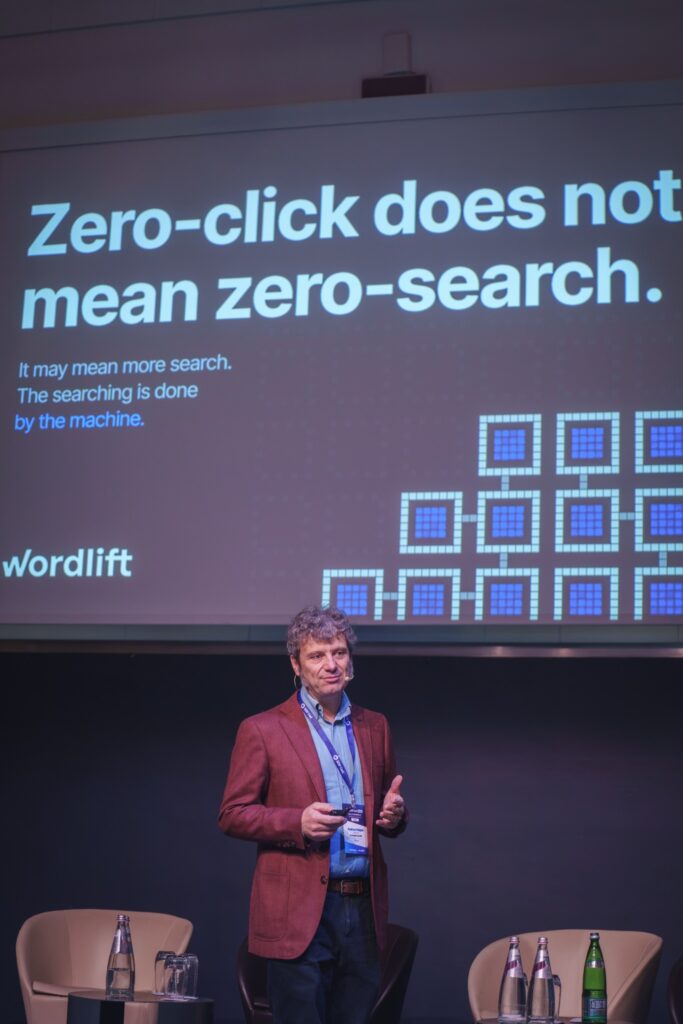
Zero-click does not mean zero-search. It may mean more search. The searching is done by the machine.
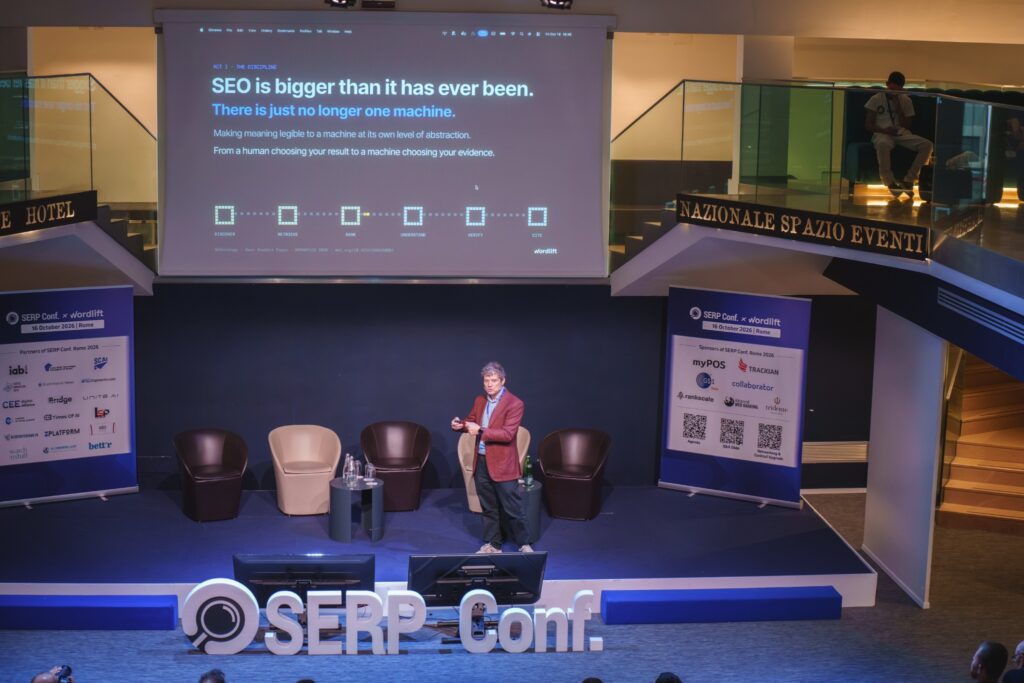
As AI agents increasingly search, evaluate, and act on information on our behalf, SEO is entering a new phase. Visibility is no longer only about ranking pages and earning clicks. It is about helping machines discover the right entities, navigate trusted evidence, and understand what actions a business allows them to perform.
At SERPConf Rome 2026, Andrea Volpini introduced Agent-Oriented Ontology Engineering (AOOE), an approach to building the semantic foundations of neuro-symbolic agents.
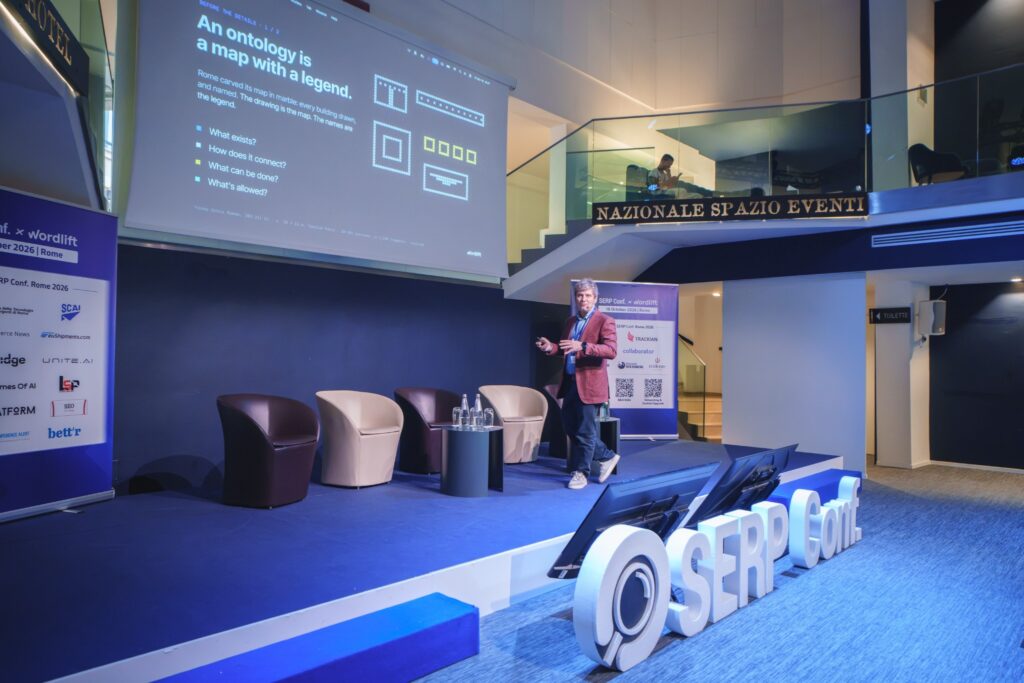
The central idea is simple: an ontology is a map with a legend. AOOE turns that map into an engine.
By connecting knowledge graphs to capabilities, constraints, provenance, and deterministic validation, businesses can create an open memory layer that agents can use without depending on a specific model or AI platform.
From AI Visibility to Agentic Readiness
The presentation explores why better information architecture, rather than simply larger models or longer reasoning chains, can transform how agents retrieve information and make decisions.
Andrea brings together original research, emerging Web standards, and practical deployments to explain three essential steps:
- Resolve — Be the thing AI finds. Establish canonical identities for your products, places, services, and organizations. Use entity resolution to link mentions to the right entities—and abstain when the evidence is insufficient.
- Connect — Be the shortest path to reliable evidence. Publish structured, linked knowledge that agents can navigate. Move beyond isolated Schema.org markup toward entity-centric pages, typed relationships, and provenance.
- Govern — Be safe to act on. Define which capabilities agents can execute, which actions require human approval, and where they must stop. Use Terms of Action, ontological constraints, and deterministic validation to enforce those boundaries.
Research and Real-World Applications
The talk shares findings from WordLift’s research on structured Linked Data as a memory layer, RLM-on-KG, and Hippocampus, alongside practical examples from enterprise environments.
In a controlled evaluation of structured Linked Data, enhanced entity pages improved answer scores by 29.6% under a standard RAG pipeline compared with plain HTML. This illustrates how making knowledge navigable can improve AI answers without changing the underlying model.
The presentation also examines governed content generation with L’Oréal, semantic modeling for insurance products, and an agentic booking experiment in which an AI agent checked real availability, retrieved a commercial offer, and handed control back to the human before personal data or payment.
Together, these examples show why the future of AI optimization extends beyond content visibility to verifiable knowledge and safely executable business capabilities.
Is Your Website Ready for AI Agents?
Start by examining how agents discover your business, interpret your entities, and interact with your services.
Explore WordLift resolve() for entity resolution, or run an AI Audit to assess your website’s readiness for the agentic web.
Author your world. Resolve it. Connect it. Govern it.
Want to explore how this approach can work with your organization’s knowledge and business processes? Talk to the WordLift team.