Converting Product Data into Clicks: Arnette’s 11.4% Growth Story
Discover how Arnette turned optimized product data into a click-driving machine in this powerful case study.

As AI search, shopping assistants, and zero-click experiences become more common, brands need product data that machines can trust. For AI systems to recommend or cite a product, they must be able to identify it reliably, understand its attributes, and retrieve up‑to‑date information from a structured, standards-based source.
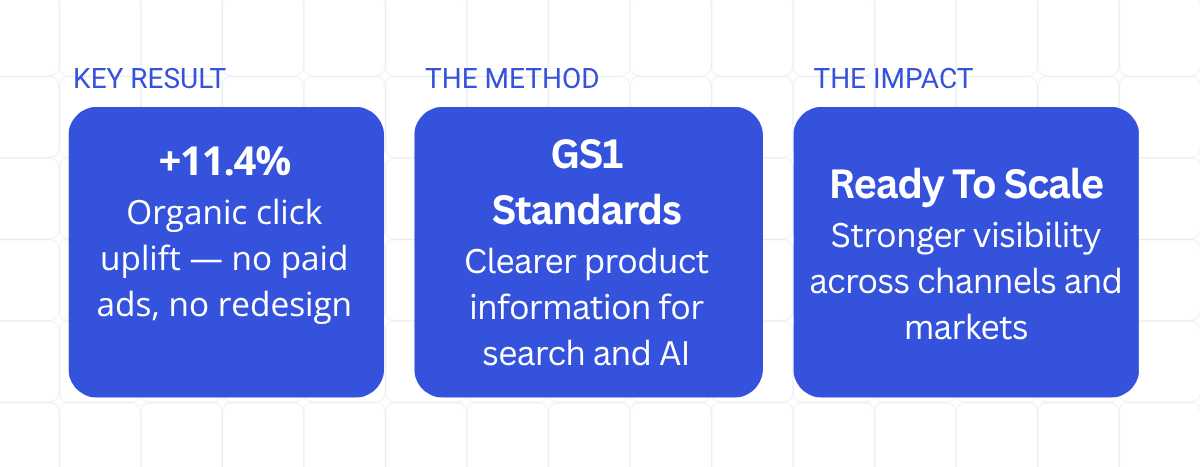
This is where GS1 standards come in. By aligning its product data with GS1 Web Vocabulary and GS1 Digital Link, Arnette built the kind of product data layer that both search engines and AI systems can use confidently and saw a measurable uplift in organic clicks as a result.
The Challenge
Arnette already had detailed product information (from GTINs to descriptions and images), but much of it wasn’t expressed using globally recognised data standards. As a result, search engines and other systems couldn’t fully leverage that information to understand products, surface them confidently, or connect them to related content.
The brand needed a way to align its product data with how the wider ecommerce and data ecosystem works.
The Solution
WordLift implemented GS1 standards on Arnette’s product catalog:
- GS1 Digital Link URIs
GTINs and other identifiers were turned into persistent web URLs that act as a single entry point to product information and related resources. - GS1 Web Vocabulary + schema.org
Key attributes such as brand name, GTIN, product name, description, images and item condition were expressed using the GS1 Web Vocabulary alongside schema.org, giving machines a consistent, standards-based way to interpret Arnette products. - WordLift product knowledge graph ID as a GS1 standard
Arnette’s product ID in the WordLift knowledge graph now maps to a GS1-compliant identifier, so resolvers and GS1-aware services can dereference it and retrieve authoritative product data.
Together, these elements created a unified product data layer that can support search, ecommerce partners, and AI systems from the same source of truth.
The Results
- 11.4% increase in organic clicks to product pages
- No redesign required
- No additional media spend
- Impact validated with a test-versus-control comparison
This uplift comes from making Arnette’s product data standards‑compliant and easier for machines to interpret, rather than from changing the look of the site or investing in new campaigns.
“With this technology, Arnette is now strategically positioned to tackle future challenges and seize new opportunities in the world of eCommerce” – Federico Rebeschini, Head of SEO in Essilor Luxottica
Why This Matters For AI Visibility
The experiment measures organic clicks, but the same GS1-based product data layer is also what AI search and shopping assistants rely on to fetch and interpret product information. By expressing products with GS1 Web Vocabulary and GS1 Digital Link, Arnette gives both search engines and AI systems a trusted, standards-compliant source of truth — a prerequisite for being recommended, cited, or linked in AI-powered experiences.
In practice, this means Arnette isn’t just improving today’s search performance; it is building the data foundation required to participate in tomorrow’s AI-driven commerce.
Ready to make your product data work harder for search and AI? Book a discovery call with our team to see how GS1 standards and structured data can help your brand build a stronger product data layer and unlock measurable, long-term growth.
7 Common Questions Business Leaders Ask About the GS1 Digital Link and GS1 Vocabulary
1.How does GS1 Digital Link enhance product structured data for online businesses?
GS1 Digital Link embeds globally standardized product identifiers (like GTINs) into web URLs, making it easier for search engines and digital platforms to understand and index product information. This improves the quality and consistency of structured data across digital touchpoints—enabling better visibility in search results, accurate product listings, and seamless integration with e-commerce, logistics, and retail platforms.
2.What business benefits does GS1 Digital Link offer to online retailers and brands?
By turning each product into a smart, web-connected asset, GS1 Digital Link supports improved traceability, enhances customer engagement, and unlocks more meaningful analytics. It helps businesses scale digital experiences—such as personalized content, dynamic marketing, and omnichannel commerce—while meeting growing expectations for transparency and seamless product discovery.
3. What is GS1 Vocabulary and how does it work?
The GS1 Vocabulary is a global standard set of detailed product and business-related properties that ensures product information is described consistently and accurately across various systems and regions. It provides hundreds of specific attributes, helping businesses present comprehensive product details that are both consistent and easily understood by search engines, partners, and customers.
4. How does GS1 Vocabulary improve SEO for ecommerce businesses?
By using GS1 Vocabulary to structure product information, businesses provide richer, more accurate data that search engines can interpret more effectively. This improved clarity leads to better ranking, increased organic traffic, and ultimately higher conversion rates. In Arnette’s case, this approach resulted in a 11.4% increase in organic clicks.
5. Can GS1 Vocabulary be integrated with my existing PIM system?
Yes, GS1 Vocabulary is highly compatible with Product Information Management (PIM) systems. It allows businesses to map virtually every data field in their PIM to a specific GS1 property, ensuring no crucial data is omitted and everything is aligned with global standards for consistency and clarity.
6. What industries can benefit from implementing GS1 Vocabulary?
While Arnette’s success story is based in the fashion industry, GS1 Vocabulary is equally beneficial for other sectors such as electronics, fast-moving consumer goods (FMCG), health, B2B, and beyond. Any industry that relies on accurate product data and aims to optimize its online presence can leverage GS1 Vocabulary to enhance product visibility and improve customer engagement.
7. What are Digital Product Passports (DPPs) and how does GS1 Vocabulary support them?
Digital Product Passports (DPPs) are digital identifiers that provide consumers with comprehensive product information, such as sustainability details, certifications, and manufacturing processes. The GS1 Vocabulary is a key enabler of DPPs, helping businesses meet emerging regulations and consumer demands for transparency, while also allowing for richer, context-aware experiences across different touchpoints in the customer journey.